

Platform · Citizen Self-Service
Citizen Portal .
The human front door to a national identity programme. Residents start online, verify a mobile number, receive a reference and arrive at their biometric appointment prepared.
Start remotely. Enrol with assurance.
Pre-registration should take the first layer of friction out of a national ID programme, not pretend that a high-assurance identity can be completed without the right evidence.
Citizen Portal makes the boundary clear: residents complete a guided online start, then move into the documents and in-person biometric appointment required by the programme.
ONLINE
Apply
Capture details and confirm a reliable contact number.
PREPARE
Reference
Issue a reference and make the next action unmissable.
IN PERSON
Enrol
Complete document review and biometric capture with BioEnrol.
A national ID journey that tells citizens what happens next.
Every screen has one job. The flow keeps the resident oriented, validates the mobile contact point before creating the application, and ends with a reference that carries into the next programme stage.
 01
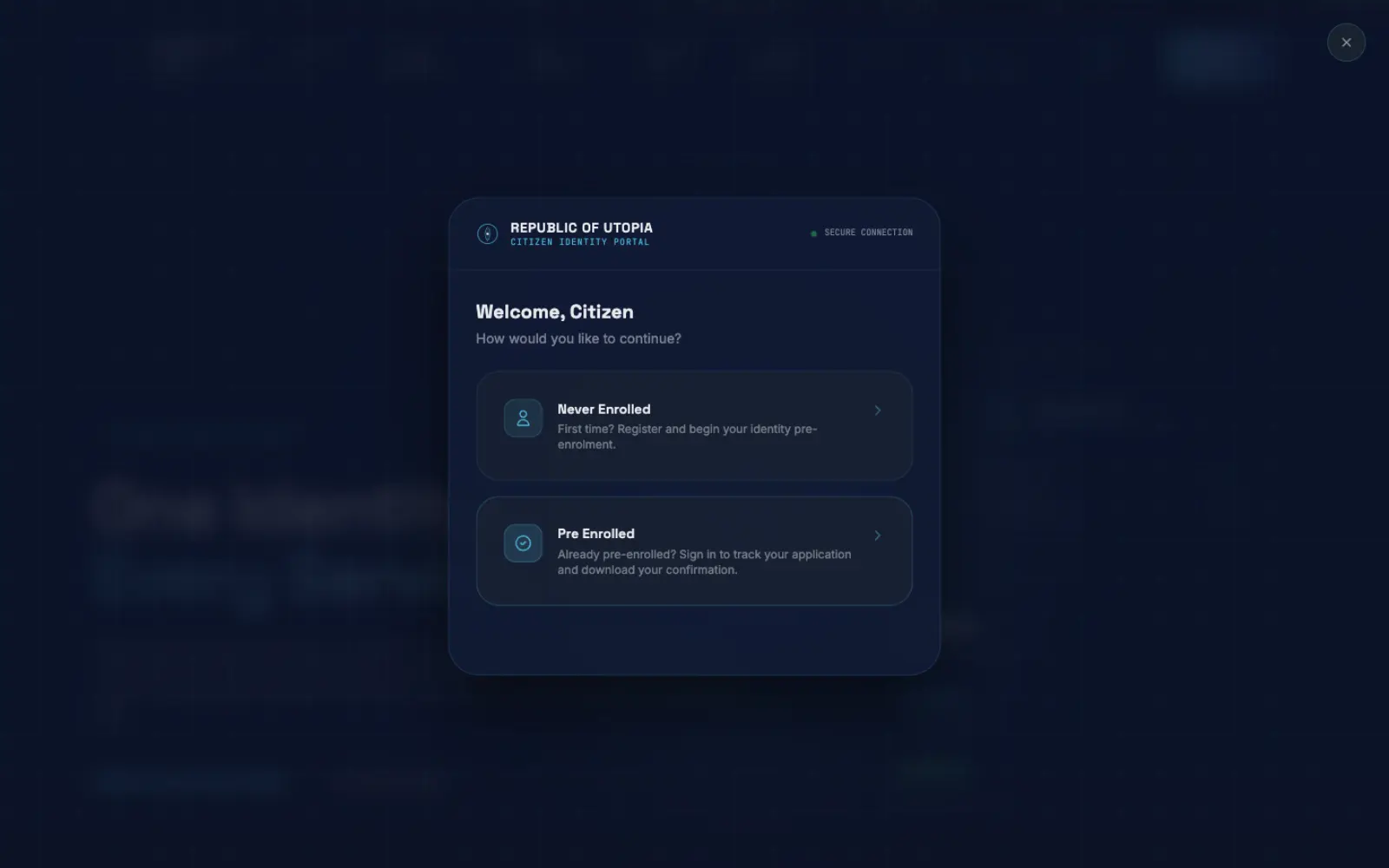
01Choose the journey
A first-time applicant starts pre-registration; a returning applicant signs in to continue or track an existing application.
 02
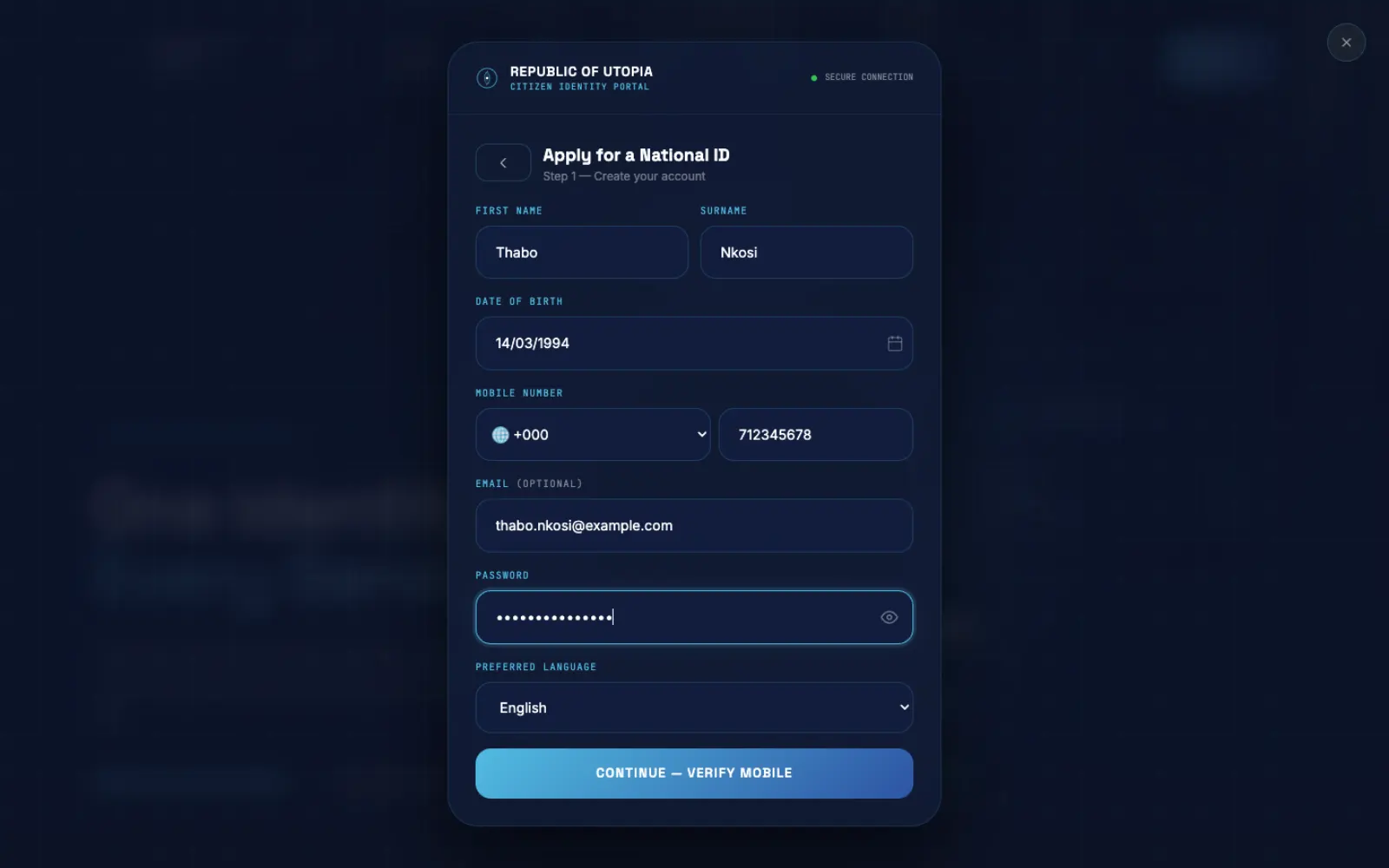
02Complete citizen details
The resident enters the essential information to open the journey, including a mobile number and preferred language.
 03
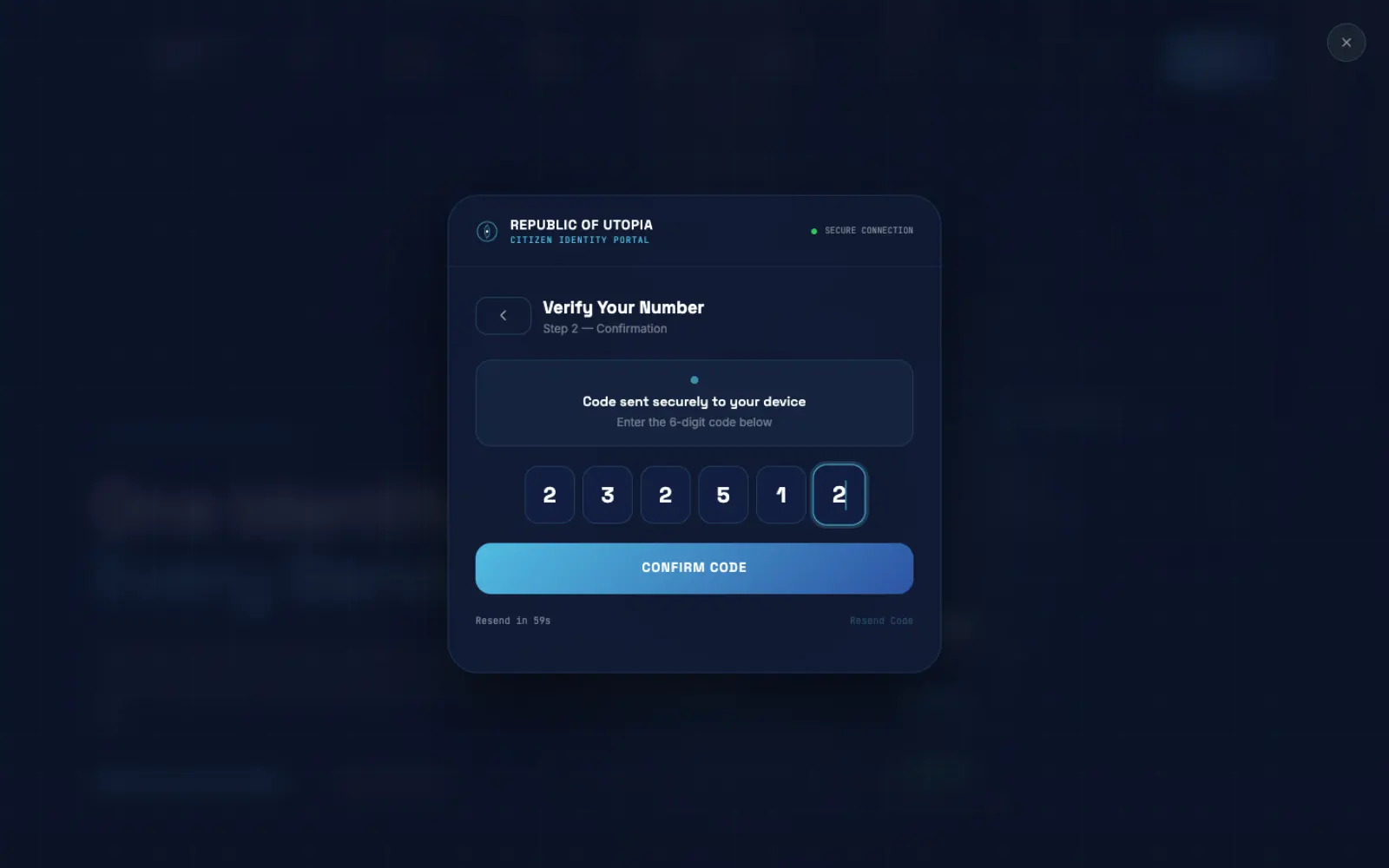
03Verify the mobile number
A one-time code confirms a reliable contact channel before the application reference is created.
 04
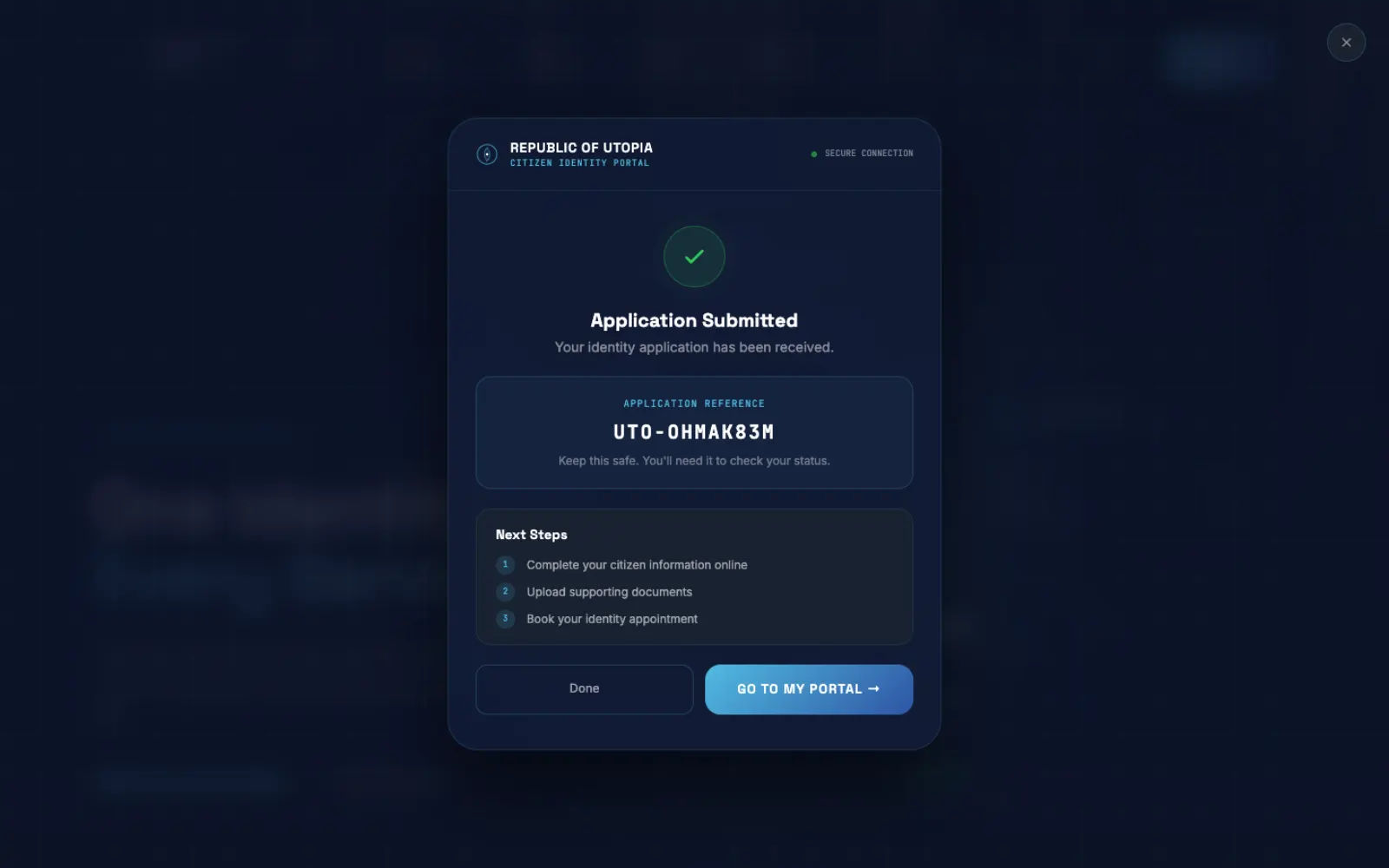
04Receive the reference
The application reference and next steps tell the resident exactly what is required next: documents and an identity appointment.
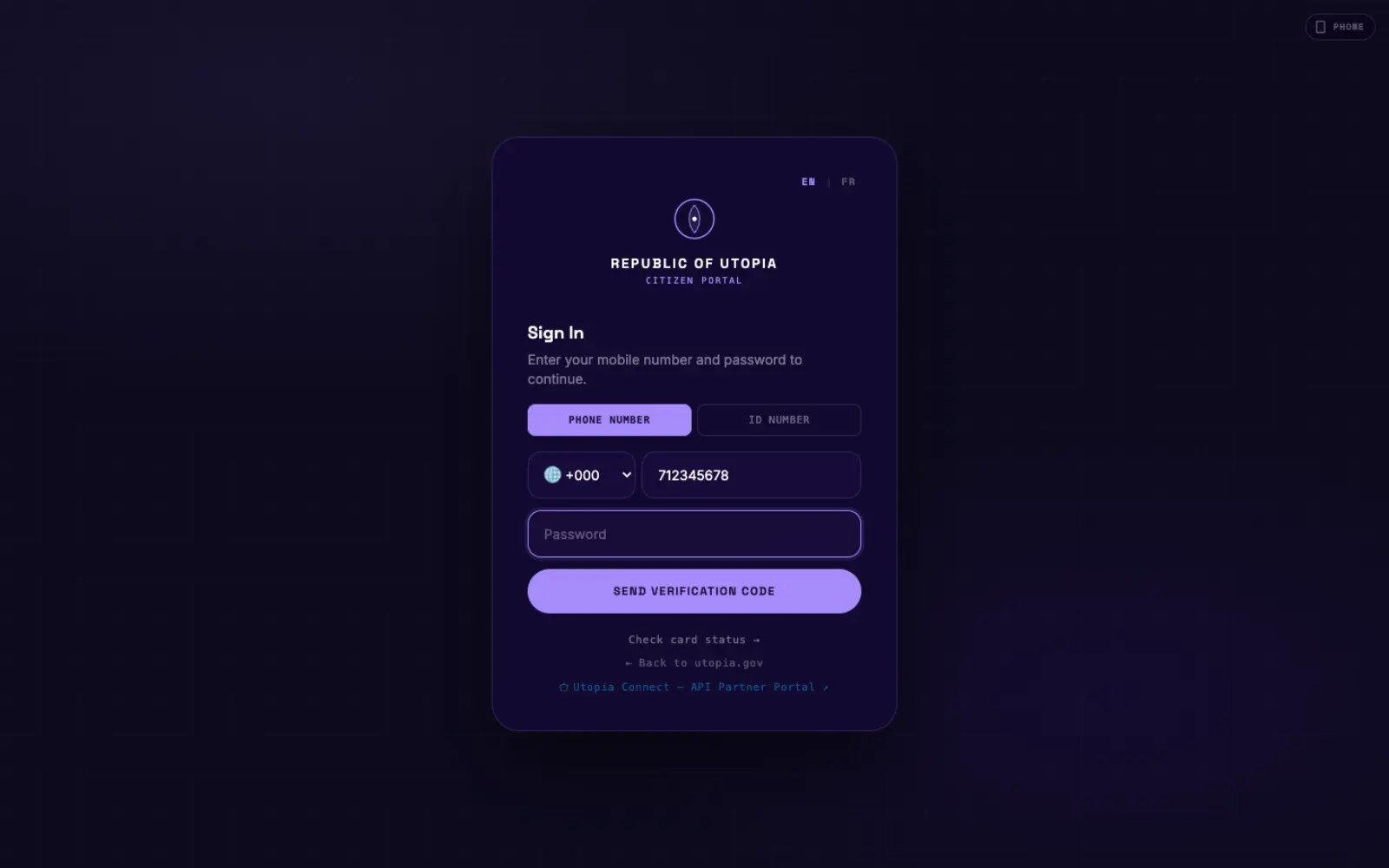
Made for programme operations
One citizen-facing layer. The right national systems behind it.
The portal is not a shadow registry. It guides the resident and gives the programme a clear channel for applications, updates and next actions, while high-assurance identity functions stay with the systems built for them.
BioEnrol and Civil ABIS
The in-person capture and biometric de-duplication stages that follow pre-registration.
GovPass and X-Bridge
The credential and governed-service layers a programme can connect once the identity lifecycle reaches that point.
A practical citizen experience
Mobile-first contact, preferred-language collection and a structured step-by-step journey designed for national rollout.
Make the first step in national identity simpler, clearer and ready for the steps that follow.
Plan the citizen journey, programme rules, assisted channels and connection to enrolment with Axon.