
Platform · Document Forensics
RealDoc .
Document forensics and liveness for identity documents and the supporting files businesses actually receive: inspect PDFs and images for signs of tampering, forgery, alteration and reproduction attacks.
Detect the evidence that has been changed
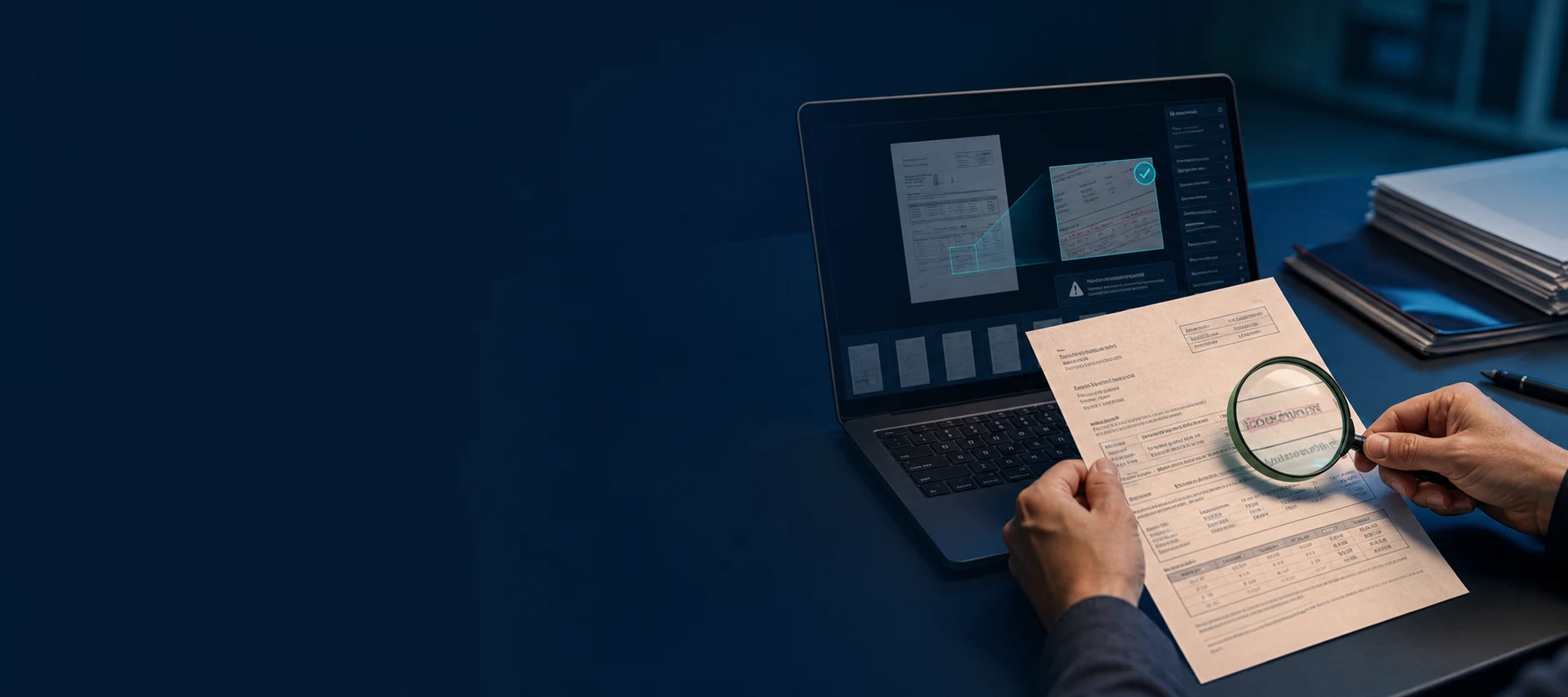
RealDoc combines document forensics with document liveness for ID documents and supporting evidence. It looks for signs that a submitted document has been edited, composited, altered or forged - and whether it is a photocopy, a screen replay or a stitched capture rather than the original document.
Built for altered evidence
Analyse a document as evidence, looking for integrity signals that can indicate a changed amount, date, name, address or other critical field.
PDFs and images in scope
Apply the same forensic approach to uploaded PDFs, scans, photographs and screenshots of the documents that arrive in real workflows.
Document liveness detection
Detect photocopies, screen replays and stitched document captures so a convincing reproduction is not mistaken for the original.
From submitted file to defensible review
RealDoc fits before a document is trusted, used to release a service or entered into a case record. It turns an opaque uploaded file into an evidence-led decision path for operations and risk teams.
01
Receive
A customer or operator submits a PDF, scan, photograph or screenshot as supporting evidence.
02
Inspect
RealDoc evaluates the document image and file evidence for anomalies that can indicate manipulation, alteration or forgery.
03
Explain
The platform returns a structured risk outcome and the signals that need attention, so reviewers know where to look.
04
Decide
Accept, request a replacement, route to review or apply the programme’s further checks and escalation policy.
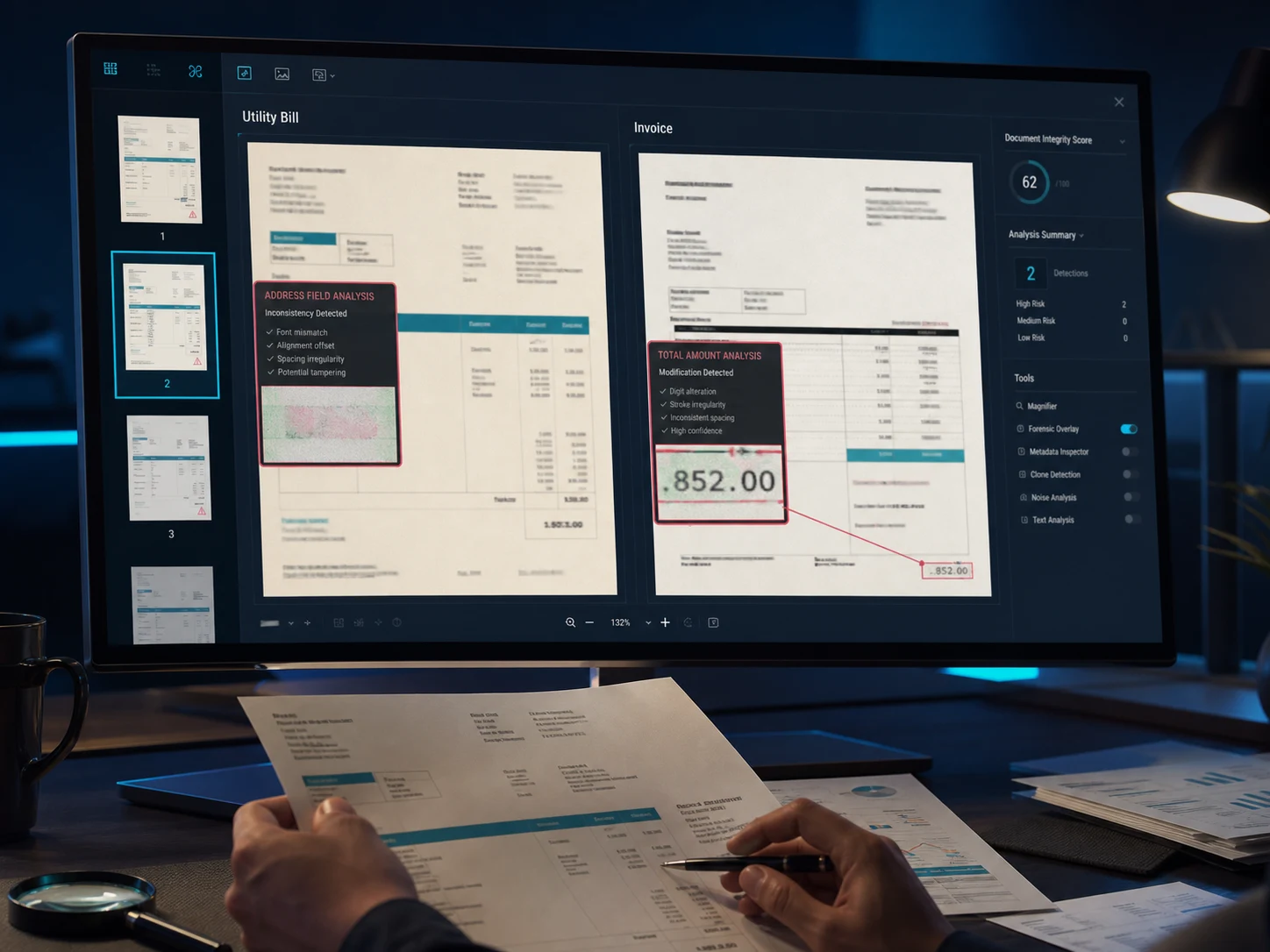
Illustrative RealDoc review workflow
Turn a suspicious file into a reviewable decision.
A document can look convincing while hiding a changed value, replaced field, composited element or inconsistent file history - or while being a photocopy, a screen replay or a stitched capture. RealDoc brings those signals into one structured review, rather than relying on a quick visual check alone.
- Identity documents, including passports, national IDs and driving licences
- Proof of address and residence evidence
- Utility bills and account statements
- Supplier, merchant and customer invoices
- Supporting documents for onboarding, credit, claims and compliance
What RealDoc brings to the programme
RealDoc combines document-integrity analysis with document liveness for operational teams that need to assess supporting evidence at scale. It does not replace identity-document reading; it helps determine whether the submitted evidence is genuine and physically present.
Alteration and tamper analysis
Inspect for signs that content, fields or regions of a document have been changed, inserted, removed or otherwise manipulated.
File and image evidence
Assess both the submitted file and its visual content, supporting review of PDFs, scans, mobile captures and document images.
Photocopy, screen and stitch detection
Identify signs that an image is a reproduced document, a replay on a screen or a photo stitched together from multiple captures.
Case-ready findings
Return a risk outcome with prioritised signals so an operations team can review, escalate or request a replacement document consistently.
Workflow and policy integration
Connect forensic outcomes to onboarding, credit, claims, compliance or customer-service workflows with programme-defined thresholds and routing.
Designed for defensible evidence
Document integrity is its own control.
RealDoc should be governed as a risk and evidence control: define which document types it evaluates, which outcomes trigger review, who may override an outcome and what evidence is retained. It gives document workflows dedicated tests for manipulation and document liveness, while identity verification remains a separate control in the overall journey.
Frequently asked questions
What kinds of documents can RealDoc assess?
Does RealDoc verify document liveness?
Does a forensic outcome automatically mean a document is fraudulent?
Related platforms
Make altered evidence harder to accept
Put document forensics into the decision path.
Talk to Axon about using RealDoc alongside your existing onboarding, evidence and fraud workflows.