What is the difference between fingerprint enrolment and verification?+
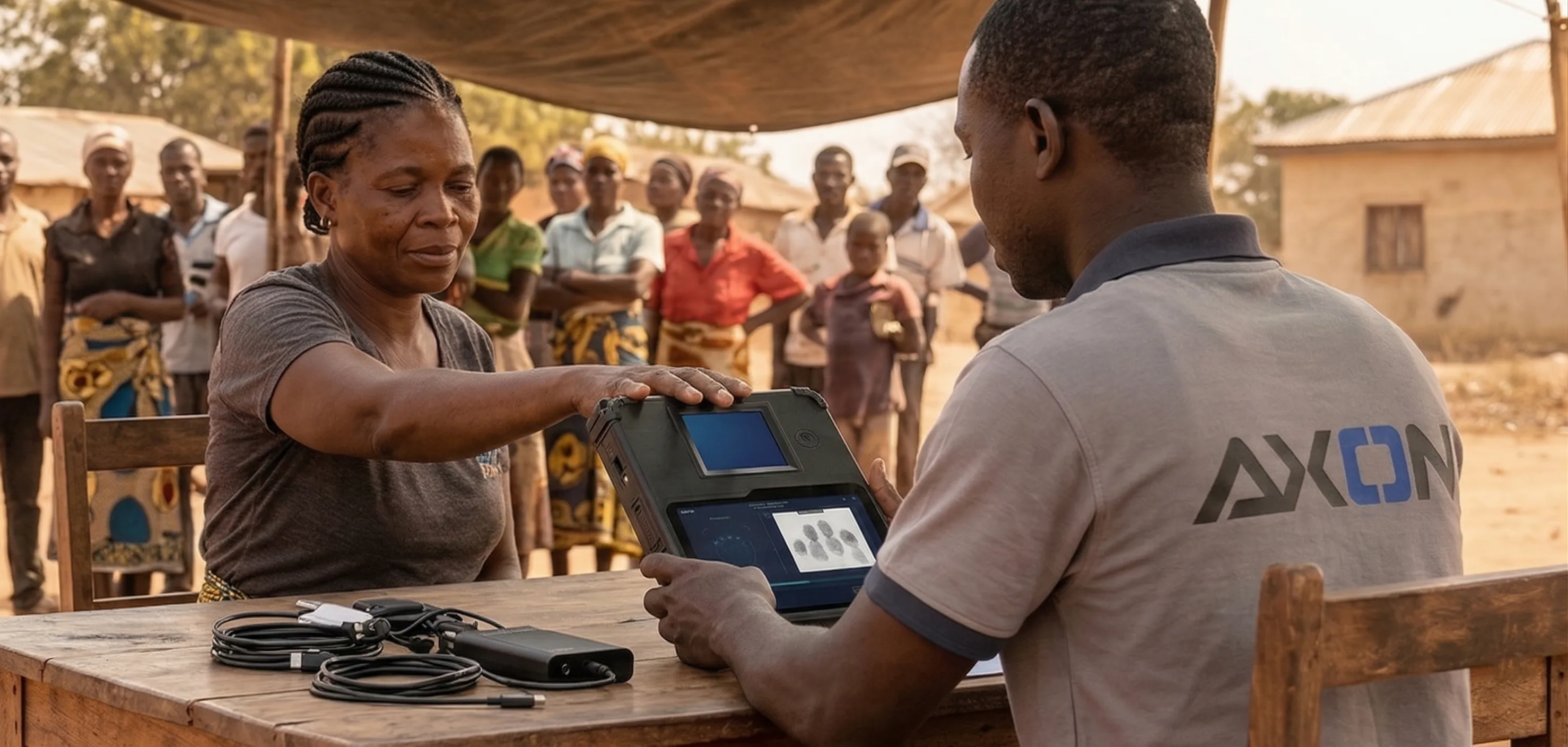
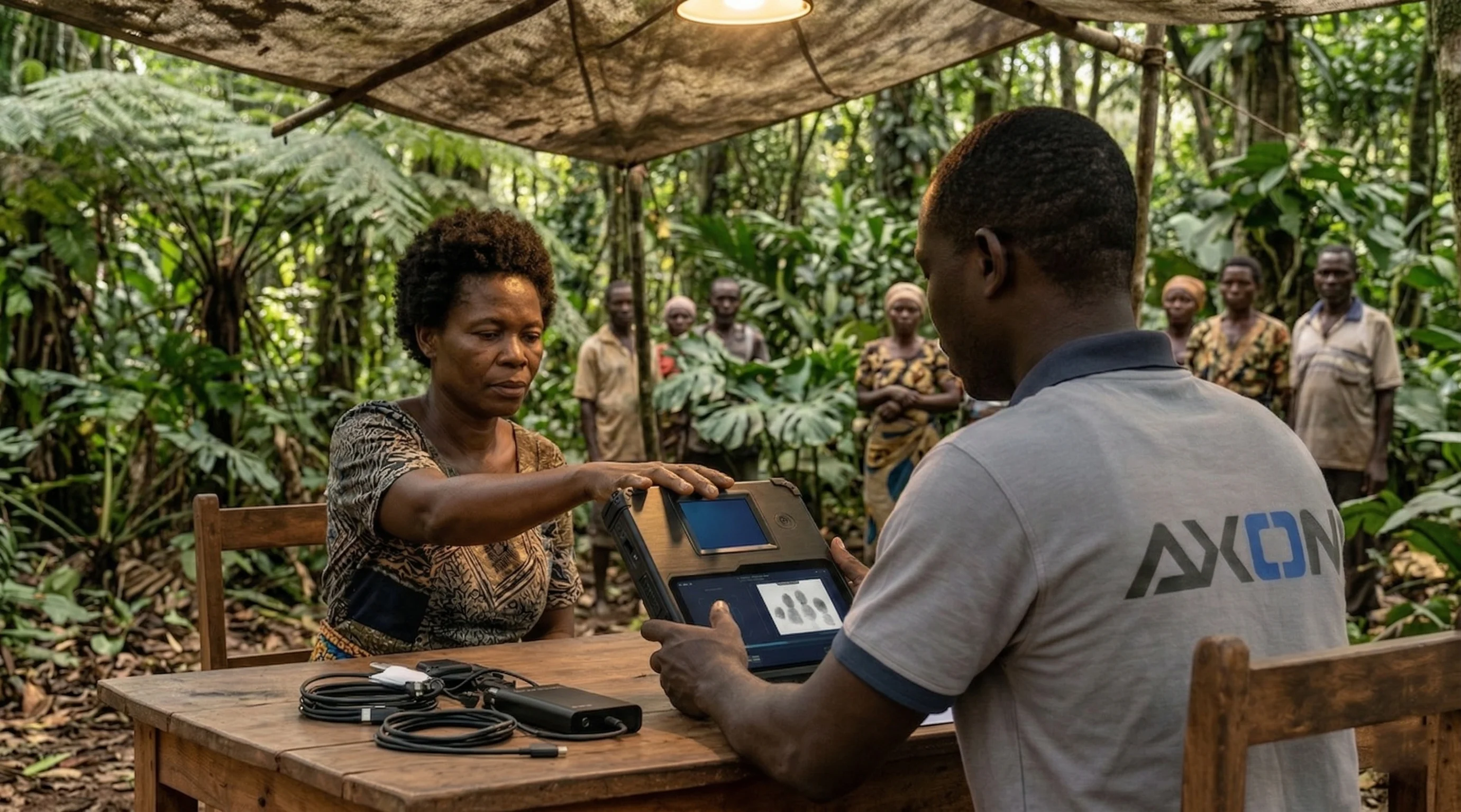
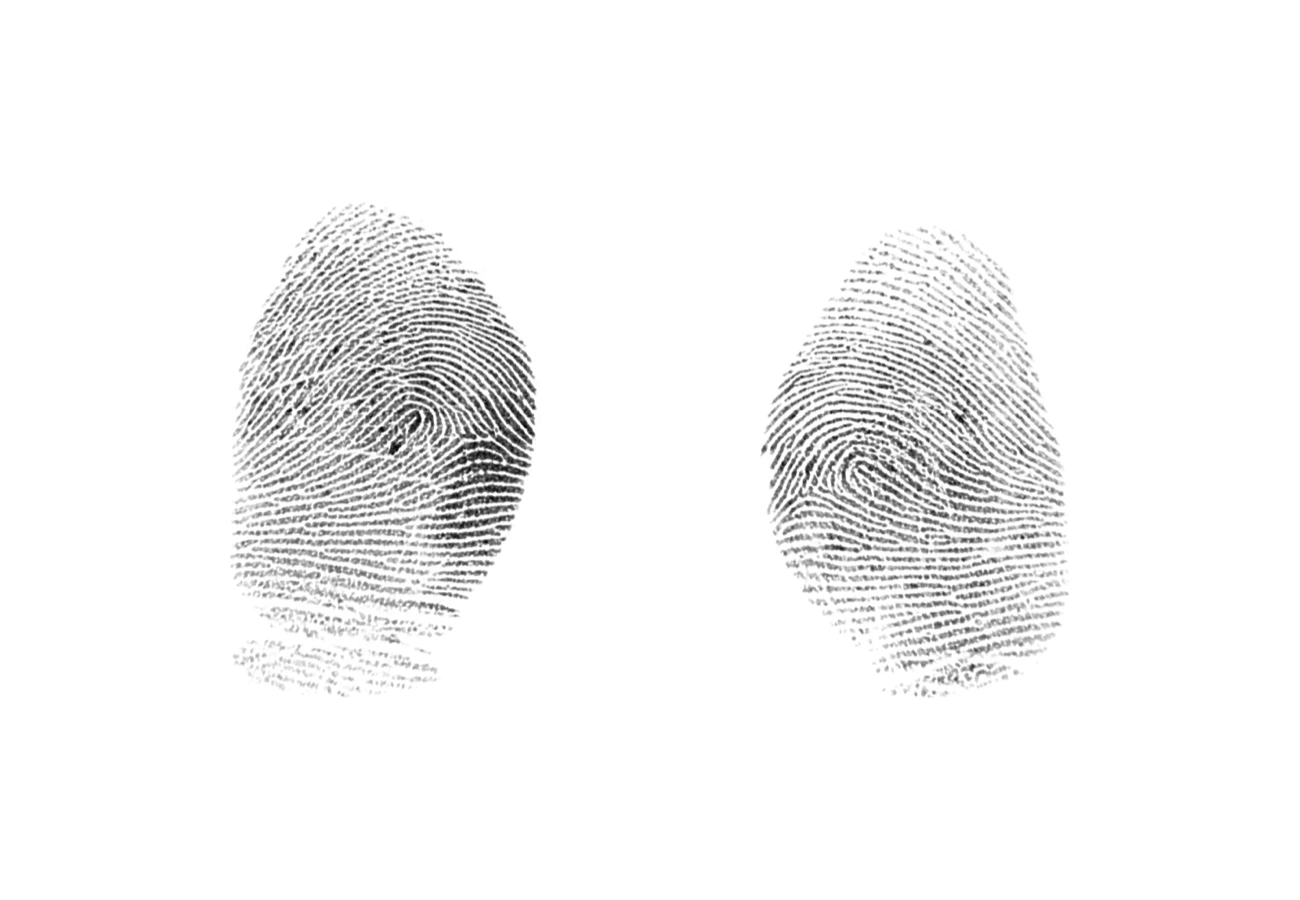
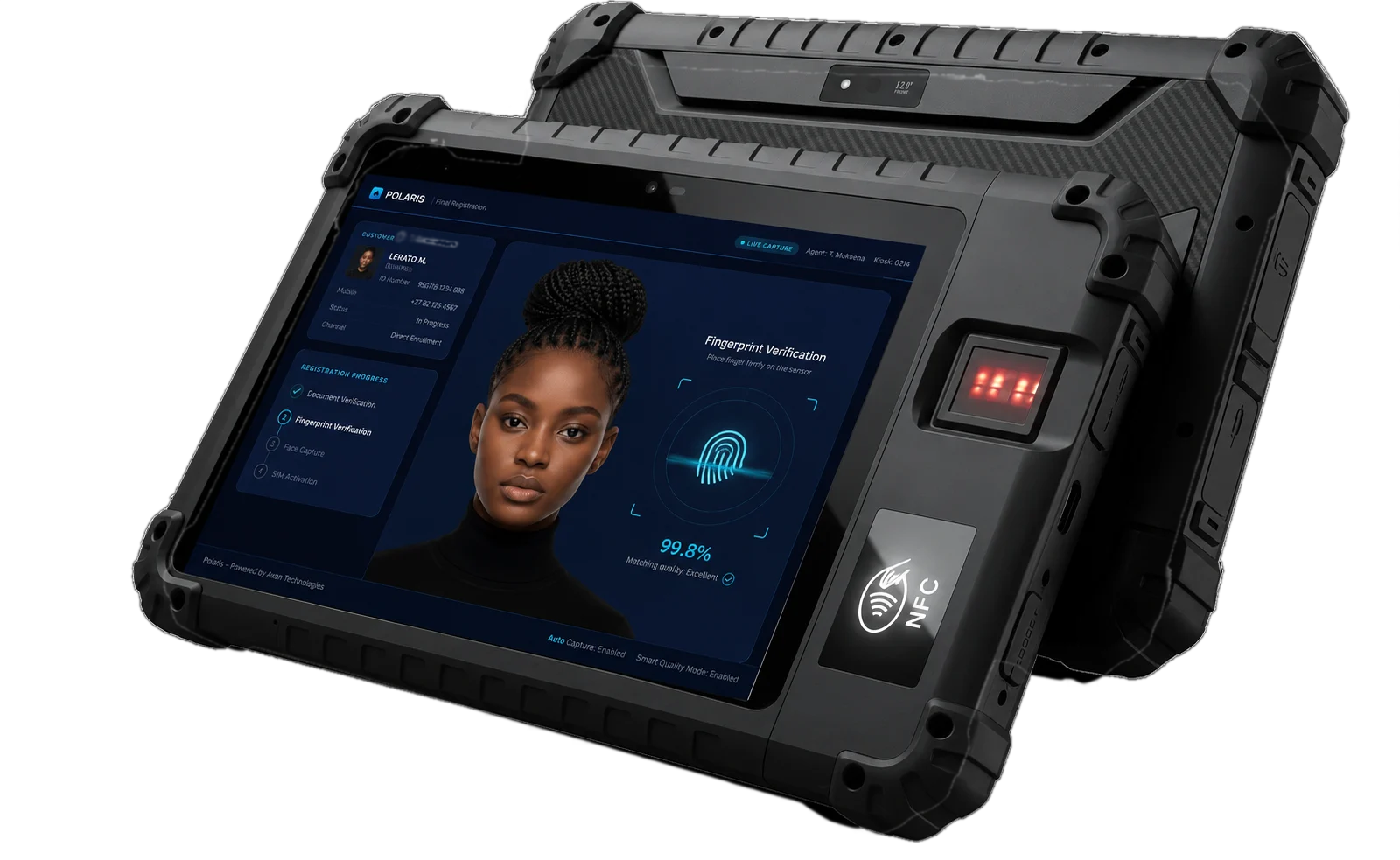
Enrolment is the one-time capture that creates the biometric record — usually multiple fingers, at the highest quality the device can produce, searched 1:N against the existing population to catch a duplicate registration. Verification is the repeated 1:1 comparison against that stored record, usually one or two fingers, seconds long. Enrolment happens once; the verifications it enables happen for the life of the identity, which is why enrolment quality is worth the extra capture time.
What does 4-4-2 fingerprint capture mean?+
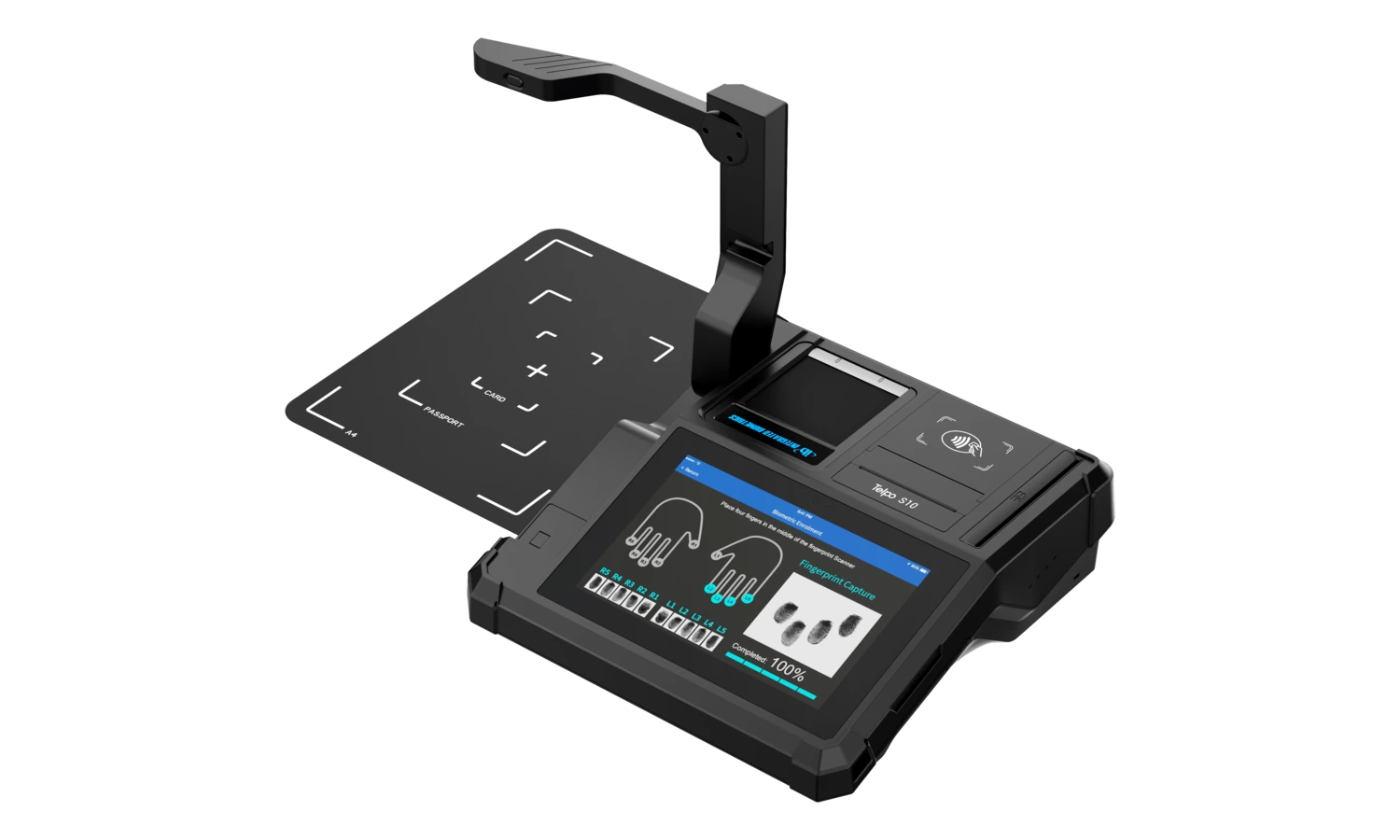
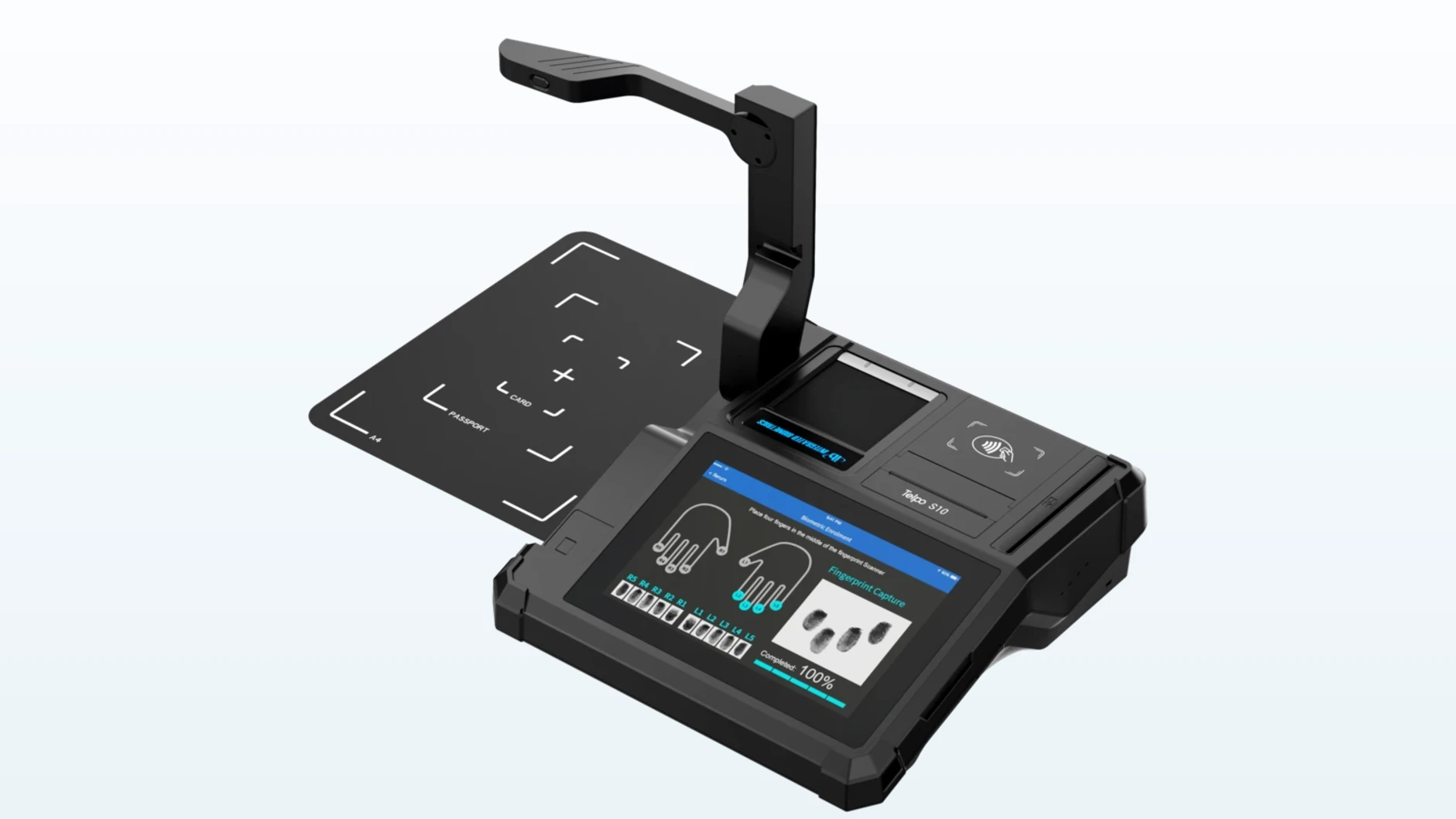
A slap capture sequence: the four fingers of one hand pressed flat together, then the four fingers of the other hand, then both thumbs — ten plain impressions in three captures, on a FAP60-class platen. Capturing in groups lets the system segment the slap into individual fingers and run a sequence check confirming they were recorded in the right order. Note that 4-4-2 produces flat impressions, not rolled ones — a full tenprint submission normally requires rolled captures as well.
Is contactless fingerprint capture as accurate as a contact scanner?+
Not yet, and the honest answer depends what you are matching against. Contactless prints compare well against other contactless prints. Cross-matching a contactless capture against a legacy contact-based registry is measurably less accurate, because a camera introduces perspective and elastic distortion a platen does not. NIST includes non-contact imagery in the PFT III evaluation and publishes guidance on evaluating contactless devices, so this is a measured gap rather than a matter of opinion — and capturing several fingers at once recovers some of it.
What is NFIQ 2 and what does the score mean?+
NFIQ 2 is an open NIST tool that scores a fingerprint image from 0 to 100 for its utility — how much that sample is expected to contribute to a successful match. 0 means no utility, 100 the highest. It is not the same scale as the original NFIQ, which used 1 to 5 with 1 as the best, so the direction is inverted between the two. Its features are standardised in ISO/IEC 29794-4, and it is calibrated on 500 ppi optical and ink contact prints — which is why contactless captures need their own thresholds.
What is WSQ, and when would you use it instead of a raw image?+
WSQ — Wavelet Scalar Quantization — is a lossy compression format the FBI developed with NIST and Los Alamos specifically for 8-bit, 500 ppi fingerprint images. It exists because standard JPEG at the ratios a national registry needs introduces blocking artefacts that destroy the fine ridge detail matching depends on. Use WSQ for storage and exchange at scale — into an ABIS, or between agencies. Use raw or a lossless format for local capture feeding immediate template extraction, and for archival masters. For 1000 ppi imagery the FBI specifies JPEG 2000 instead.
What do NIST PFT III and MINEX III actually measure?+
Two different things. PFT III evaluates proprietary fingerprint templates in one-to-one verification — vendor-defined encodings only their own matcher can read, tested across rolled, plain, ink, 500 and 1000 ppi and non-contact imagery. MINEX III evaluates interoperable templates in the ANSI/INCITS 378 format, testing whether one vendor’s template can be matched by another vendor’s matcher. Proprietary templates are more accurate; interoperable templates let you change vendor — a strong result in one implies nothing about the other. NIST publishes ordered results for both, and it does rank submissions on its published metrics; what it does not do is certify or endorse a product.
Can a fingerprint be spoofed, and what stops it?+
Yes. Casts made from gelatin, wood glue, silicone or latex, thin films worn over a genuine finger, and printed ridge patterns are all documented attacks — and a camera-based contactless capture adds photographs and screens to that list. The countermeasure is presentation attack detection, tested and reported under ISO/IEC 30107-3 using two figures: APCER, the rate attacks get through, and BPCER, the rate genuine users are wrongly rejected. Either number can look good alone, so ask for both. Contact sensors can combine hardware signals with image analysis; contactless capture has only the image, which makes its PAD the less mature of the two today.
What happens when someone’s fingerprints will not enrol?+
It happens more often than vendor material admits. Manual labour, age, dryness, scarring, henna and certain medical conditions all degrade ridge detail, and a percentage of any national population will not produce a usable print. A credible programme plans for this before deployment: try an alternate finger, allow a supervised exception with a recorded reason, and fall back to a second modality such as face where the policy calls for it. Designing the exception path is a policy decision, not an algorithm problem.
Where does Axon’s fingerprint algorithm rank in NIST testing?+
CONFIRM RANK in CONFIRM TRACK, as of CONFIRM DATE — see the published NIST PFT III results directly. NIST publishes ordered results for every submission; it does not certify or endorse a product, and standings move with each new submission round, so treat any dated ranking as a snapshot, not a permanent status.